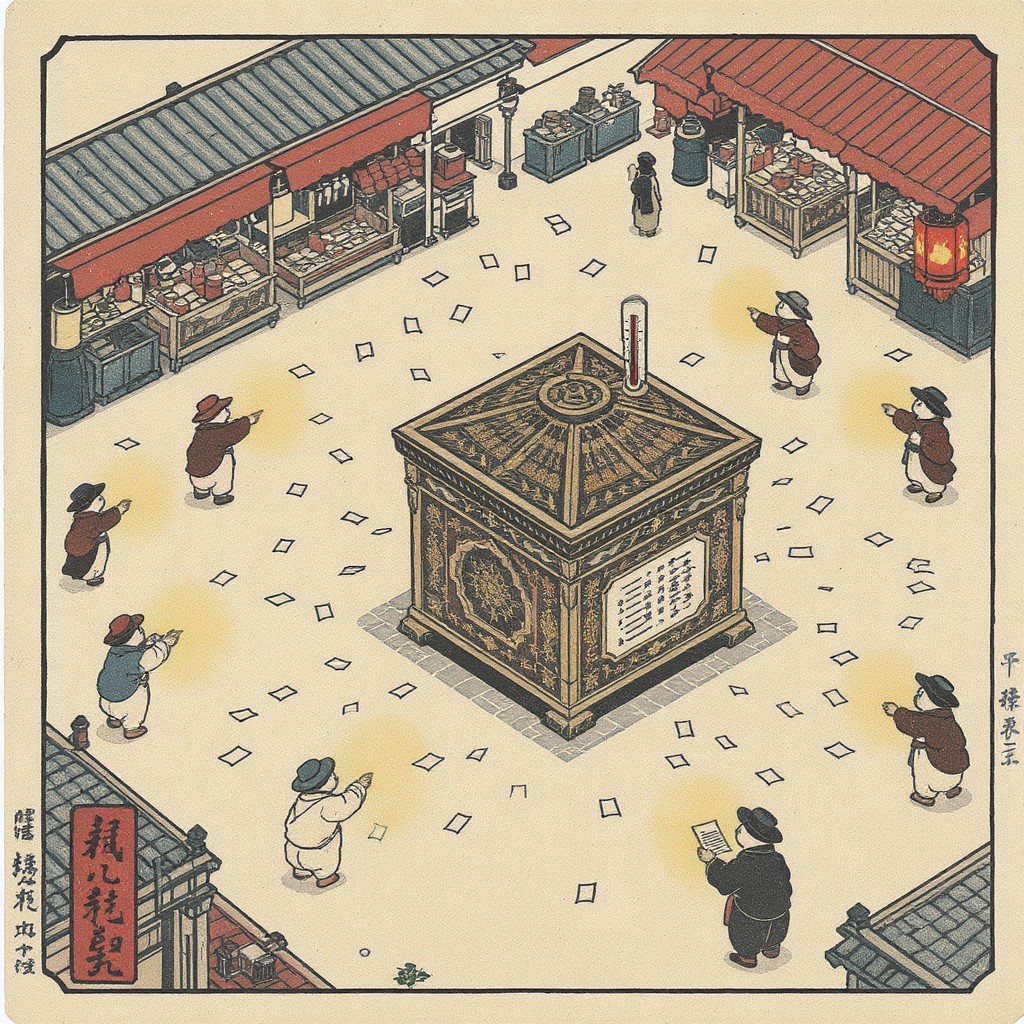
Not long ago, a coach who had a well-designed PDF workbook was doing something most of their competitors were not. It took time, a designer, and enough margin in the business to prioritize it.
Now that same PDF takes an afternoon.
The thing that changed is obvious: AI dropped the cost of creation dramatically. The thing that did not change is less obvious but more important: the infrastructure that runs those tools has a ceiling, and that ceiling is closer than it looks.
The math no one talks about in coaching circles
Every coach generating a client workbook, every course creator exporting a companion guide, every membership owner running a monthly newsletter through an AI tool: each one of those is a request on a shared system. A request that costs compute. Compute that costs electricity.
At the scale of one coach, this is invisible. At the scale of millions of coaches, course creators, and solo founders all doing the same thing, it adds up to something the grid was not built for.
This is not a metaphor. AI infrastructure is running into real physical constraints: power availability, cooling, hardware supply chains. The platforms you use are spending enormous amounts managing those constraints. That cost shows up in your subscription.
What this actually looks like for you
Rate limits that did not used to matter now do. A tool that felt unlimited in 2023 sends you a "usage limit reached" message in 2026. Features that were included are now add-ons. Prices that were introductory are now standard, and standard is going up.
The coaches who feel this least are the ones who were already using AI deliberately. One clear brief, one generation, one good output. Not ten prompts chasing a slightly better version of something that was already fine.
The coaches who feel it most are the ones who treat generation as free. Who regenerate because they are not sure what they want. Who produce five artifacts a week and use one of them.
The artifact overload problem from your audience's side
There is a second issue that runs alongside the infrastructure one.
Your audience is also drowning in artifacts. Your clients are downloading more free PDFs, guides, and toolkits than they can use. Their downloads folder is full. Their email inbox has three unread lead magnets in it right now.
This is not a reason to stop making things. It is a reason to make fewer things that are better.
The coaches who stand out right now are not the ones generating the most artifacts. They are the ones generating artifacts that are specific enough to be immediately useful, short enough to actually finish, and tied closely enough to a real client problem that the client thinks "this is for me" in the first thirty seconds.
An artifact built on a clear brief and grounded in your actual client experience does more with less. It takes fewer iterations to produce. It performs better when it ships. And it does not contribute to the noise problem for your audience.
The practical version: what to do differently
Build one thing at a time
Decide what it is, who it is for, and what it needs to do before you open any tool. A brief does not need to be long. It needs to be specific.
Do not iterate to perfection
Get to something that delivers the core promise, run a human edit pass, and ship it. The artifact that exists and does one thing well beats the artifact that is still being refined six weeks later.
Reuse before you regenerate
If you have content that worked, an old workshop recording, a client FAQ, a call transcript: start from that. AI is most efficient when it is working from your actual material rather than generating from scratch.
Audit your stack
If you are paying for three AI tools and using one of them properly, that is a cost problem and a focus problem. Fewer tools used well is the answer in 2026.
FAQ
What is "the grid" and why does it matter to coaches?
The electrical grid powers AI data centers. As more creators use AI tools, the infrastructure to run them becomes a real constraint. That shows up as pricing changes, rate limits, and slower tools.
Is this a reason to stop using AI in my coaching business?
No. It is a reason to use it more intentionally. The efficiency habits that protect you from cost increases are the same habits that produce better client-facing work.
How do I know if I am using AI inefficiently?
If you regularly generate and discard more than you use, or if you are regenerating because you are not sure what you want, that is a signal. Start with a brief that names the outcome, the audience, and the format before you generate anything.
What makes an artifact worth creating in 2026?
Specificity. One clear outcome, one defined audience, one format that fits the content. A narrow artifact that serves the right person perfectly outperforms a broad one that serves everyone adequately.
Thank you for reading. There is more on the blog whenever you are ready. And if you want to work through this alongside other coaches and creators, come and join us inside the community.