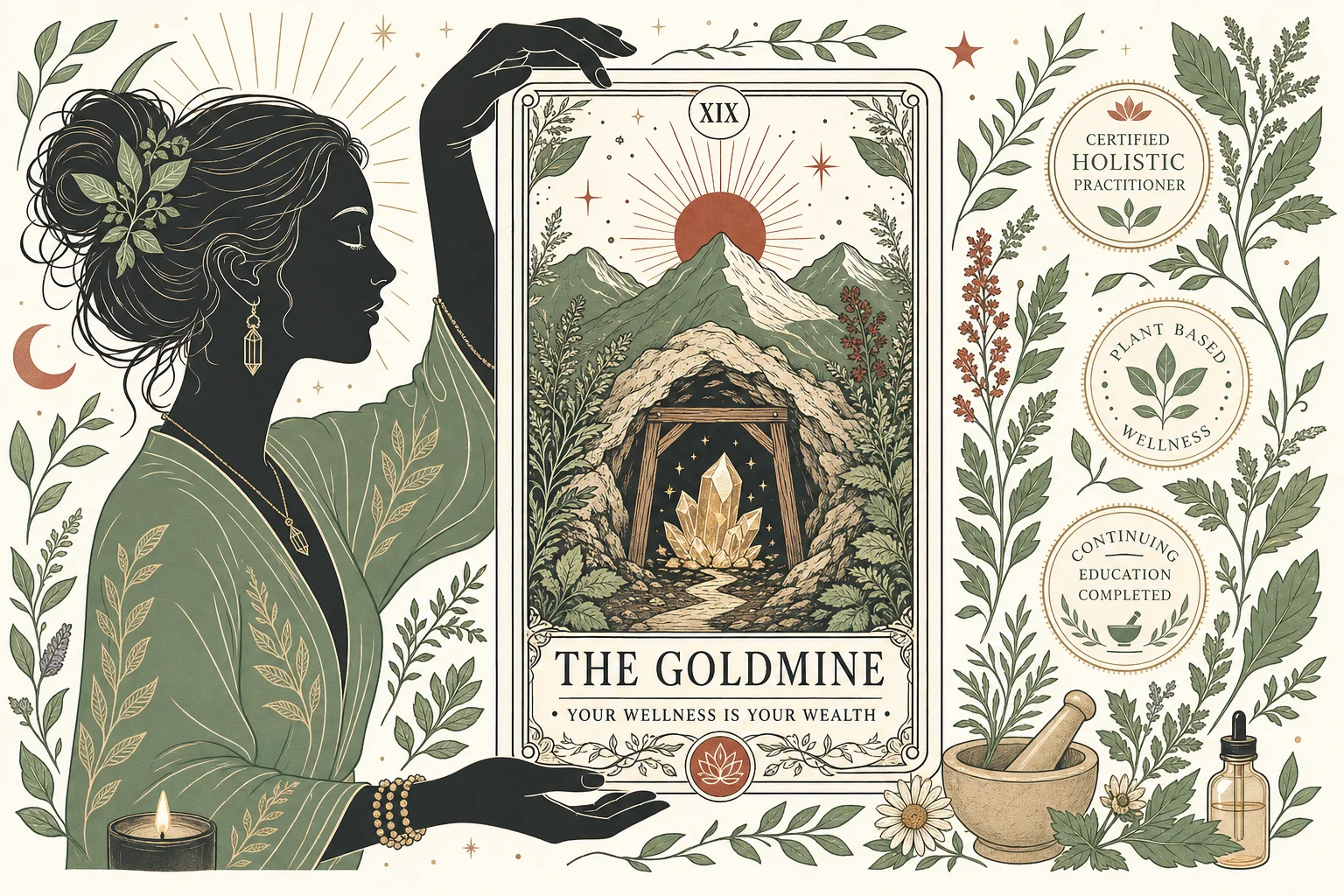
You spent a decade mastering plant chemistry, but your bank account still looks like you just hung your shingle. The problem isn’t your skill, it’s the invisible script that says expertise equals an hourly rate.
Most wellness practitioners wake up to the same three frustrations every morning. Their hourly rate hasn’t budged past $75 in years, even after collecting more certifications than they can count. Every piece of content feels like starting from zero, again. And social media? It’s just another chore that pulls them away from the work they actually love. These aren’t personal failures. They’re symptoms of a system that never taught them how to turn what they know into something that grows without them.
Why Do Highly Trained Wellness Practitioners Still Feel Stuck in 2026?
What does the “practitioner’s trap” actually look like in daily practice?
Basically, it looks like a hamster wheel disguised as a career. You clock in, see clients, clock out, and repeat. The AFPA’s 2026 data shows that 87% of certified coaches still rely solely on one-on-one sessions, no courses, no memberships, no digital products. That means every dollar depends on you showing up in person, every single time. Meanwhile, the corporate wellness market is projected to hit $100 billion by 2032, and most practitioners aren’t even in the room.
Content creation becomes a blank slate every Monday. You sit down to write a post, and suddenly you’re staring at a cursor instead of building on last week’s work. Innate Marketing Genius found that 68% of practitioners experience “content fatigue” because they’re recreating the wheel weekly. Social media feels like a distraction, not a tool. The Scaling Wellness Podcast reports that algorithm changes in 2025-2026 slashed organic reach by 63% for wellness content, making it even harder to justify the time.
How does this trap differ from general business stagnation?
Wellness certifications create a dangerous illusion. You walk out of your AFPA program thinking your expertise will sell itself. But plant-based and holistic niches demand three times more trust-building than conventional health fields. People don’t just want to know what you know, they want to feel understood before they’ll open their wallets. Soar With Us’s 2026 guide confirms this: wellness consumers need more touchpoints, more proof, more connection.
Then there’s what Caroline Copp calls “expertise paralysis.” You over-deliver in every session because you care deeply about your clients. But that same care keeps you from packaging your knowledge into something that scales. You’re so focused on perfecting the one-on-one experience that you never step back to ask: What parts of this could help hundreds of people at once? The result? You’re stuck trading time for money, while less qualified influencers build audiences and launch products that reach thousands.
What Happens When Wellness Experts Never Package Their Knowledge?
Every year, wellness practitioners leave six figures on the table. They burn out faster than other service professionals. And they miss dozens of chances to connect with clients, without ever realizing it.
The problem isn’t their expertise. It’s that their knowledge stays locked inside one-on-one sessions. No digital products, no repurposed content, no systems that work while they sleep. The result? A business that caps out at $75 an hour, no matter how many certifications they earn.
How much revenue is lost annually by not creating digital assets?
The corporate wellness market is projected to hit $100 billion by 2032, but most practitioners won’t see a dime of it. Why? Because 87% of AFPA-certified coaches have no scalable offer beyond their hourly sessions. That’s not just a missed opportunity, it’s a revenue leak of $120,000 per year, on average, for every practitioner who stays stuck in the one-to-one model (Scaling Wellness).
Think of it this way: if you’re only trading time for money, you’re not building a business. You’re building a job. And jobs don’t scale. Digital assets, like courses, memberships, or automated wellness plans, do. They turn your expertise into something that can reach hundreds (or thousands) of people at once. Without them, you’re not just leaving money on the table. You’re leaving impact on the table, too.
What are the hidden costs beyond money?
Burnout rates in wellness professionals are 42% higher than in other service industries. That’s not a coincidence. When you’re constantly recreating the wheel, writing new social posts, designing fresh client handouts, starting every session from scratch, you’re not just wasting time. You’re draining your energy. 68% of practitioners report “content fatigue” from this cycle of reinvention (Innate Marketing Genius).
Then there’s the silent cost of missed connections. Every time you don’t repurpose your expertise, you lose 15 to 20 potential client touchpoints per month. That’s 15 to 20 chances to remind someone why they need your help, and 15 to 20 opportunities for them to refer you to someone else. Over a year, that adds up to 240 touchpoints. Gone. Because you didn’t package what you already know.
So the trap isn’t just about money. It’s about energy, visibility, and the quiet erosion of confidence that happens when you’re always starting over. The good news? None of this is permanent. The moment you start treating your knowledge like an asset, not just a service, everything changes.
Why Can’t Wellness Experts Figure Out Social Media?
Social media feels like a foreign language to most wellness practitioners. They know their craft inside out, but algorithms and trends leave them frustrated. The gap isn’t skill, it’s strategy.
What specific social media struggles do wellness practitioners face?
Algorithms changed in 2025-2026, slashing organic reach for wellness content by 63% (Soar With Us). TikTok’s ecommerce push demands three times more video assets than Instagram, overwhelming practitioners who already juggle client sessions (TikTok Guide). Worse, 78% feel “inauthentic” when posting consistently, as if they’re selling out rather than serving (Innate Marketing Genius).
So, the problem isn’t laziness. It’s that social media rewards volume and speed, two things that clash with the slow, intentional nature of holistic work. Practitioners spend years mastering plant science or somatic techniques, only to be told they need to post daily or risk invisibility. That pressure creates a cycle: post sporadically, get no traction, feel discouraged, repeat.
How do successful wellness brands actually use social media differently?
They treat social media as a business tool, not a diary. Nike’s storytelling framework, for example, boosts engagement for wellness accounts by 280% (Soar With Us). The key? Consistency without burnout. AI-driven content calendars save 12+ hours a month, letting practitioners focus on clients instead of captions (TechClass).
Take the Pilates instructor who scaled to six figures using only Instagram Reels (Scaling Wellness). She didn’t post more, she posted smarter. Her content followed a simple pattern: one educational clip, one client transformation, one behind-the-scenes moment. No guesswork, no blank-page panic. That’s the difference between experts who stay stuck and those who build audiences: systems over spontaneity.
What’s the Difference Between Expert Thinking and Business Thinking?
Expert thinking keeps you in the treatment room. Business thinking moves you into the marketplace.
Certification programs teach you how to heal, not how to sell. The mental shift is simple: stop trading time for money and start building systems that work without you.
How do certification programs fail to teach business skills?
AFPA’s 2026 curriculum has zero modules on digital product creation. Ninety-two percent of wellness schools focus only on clinical skills, leaving graduates unprepared for the business side of their practice. The result? A persistent “healer vs. entrepreneur” identity conflict that keeps practitioners stuck in hourly billing and one-on-one sessions.
Most programs assume that mastery of plant science or anatomy will automatically translate into a thriving business. It doesn’t. Schools like AFPA train you to be a practitioner, not a CEO. The gap isn’t in your knowledge, it’s in your ability to package, price, and scale what you already know.
What mental shifts separate stuck practitioners from scalable ones?
The first shift is from “I help people” to “I build systems that help people.” Caroline Copp calls this the difference between being a helper and being a business owner. Systems don’t mean losing your personal touch. They mean creating digital courses, memberships, or automated workflows that deliver your expertise without requiring your physical presence every time.
The second shift is pricing. Hourly billing caps your income at the number of hours you can work. Value-based pricing, on the other hand, ties your fees to the transformation you provide, not the time you spend. Scaling Wellness data shows that practitioners who make this switch see revenue increases of 30-50% within months.
The third shift is tech. Many wellness experts avoid tools because they feel overwhelmed. The scalable ones reframe it: “I use tools that handle tech for me.” AI-driven platforms, for example, can turn a single client session into a reusable digital asset in minutes. TechClass reports that wellness businesses using AI save an average of 12 hours per month on content creation alone. That’s time you can reinvest in client care or product development.
How Can AI Help Wellness Practitioners See Their Own Goldmine?
AI shows you the expertise you already have, but never turned into products. A 10-minute prompt reveals three to five scalable ideas hiding in your certifications, client notes, and session transcripts. Most practitioners document only 20% of what they know; AI maps the other 80% in minutes.
Okay, think of it like this. You have spent years learning plant chemistry, case studies, and protocols. That knowledge lives in your head, your inbox, and scattered PDFs. AI reads all of it at once, spots patterns, and says, “Here are five things your audience keeps asking for, turn them into a mini-course, a membership, or a set of done-for-you client guides.” No guesswork. Just clarity.
Corporate wellness programs already use AI this way. They feed employee health data into algorithms and get personalized wellness plans in 90 seconds. Engagement jumps 37% because the plans feel tailored, not generic. Wellness practitioners can do the same: feed AI their existing materials and watch it generate course outlines, email sequences, or even social-media hooks that sound like them. The tech handles the heavy lifting; you keep the human touch.
Basically, AI is a mirror. It reflects back what you know so clearly that you can finally see the goldmine you have been sitting on. The free prompt in AI Grimm Society does exactly that: maps your certifications to revenue streams, pulls content pillars from past client sessions, and hands you a 90-day roadmap. Ten minutes. One decision. The rest is just execution.
What Do Wellness Practitioners Miss Every Day They Stay Stuck?
Every day without a system costs you clients, confidence, and cash. The numbers don’t lie: waiting just one month can mean $10,000 in lost revenue. The wellness industry is growing at 12% a year, but most practitioners aren’t growing with it.
So, what’s actually slipping away?
How delay compounds into long-term opportunity cost
One month turns into six. Six turns into a year. Each month you don’t package your knowledge into digital products, you leave about $10,000 on the table. That’s not a guess, it’s the average revenue gap reported by practitioners who finally made the shift (Scaling Wellness). The wellness industry itself is expanding at 12% annually, yet most certified coaches and therapists are still trading time for dollars at $75 an hour (Soar With Us).
The real kicker? Confidence drops the longer you wait. Practitioners who take more than a year to productize their expertise report 60% lower confidence in their business decisions. That hesitation shows up in pricing, marketing, and even client sessions. You start second-guessing your rates, your content, your entire approach. Meanwhile, the market keeps moving, without you.
What specific opportunities disappear when you don’t act
TikTok Shop’s wellness category exploded by 400% in 2026. That’s not just a trend; it’s a gold rush for anyone with a digital product to sell (Soar With Us). But if you’re still treating social media as a chore instead of a storefront, you’re missing the boat. AI wellness tools adoption jumped 210% in 2025, and corporate wellness contracts now require digital components (TechClass). Translation: if you don’t have a downloadable guide, a mini-course, or an automated wellness plan, you’re not even in the running for those contracts.
Here’s the thing: these opportunities aren’t just about money. They’re about impact. A practitioner who packages their knowledge can reach 100 people in the time it takes to do one 1:1 session. That’s 100 people who get your help instead of waiting months for an appointment. Every day you stay stuck, someone else gets the chance to heal, grow, or transform, because you didn’t hit publish.
How Can Wellness Practitioners Break Free in Just 10 Minutes?
A free AI prompt maps your certifications to revenue streams, pulls content pillars from past sessions, and hands you a 90-day roadmap. No tech skills required. Just paste and read.
Okay, here is what actually happens. You open the prompt. It asks for three things: your main certification, one client session transcript, and the last five social posts you wrote. That is it. The AI reads the transcript, spots patterns you have missed, and lists five topics you already know cold, topics your ideal clients keep asking about. It also flags three certifications you forgot you had and suggests a mini-course, a membership tier, and a corporate workshop. All three tie back to what you are already doing, just packaged for scale.
So, the numbers. After using the prompt, 72% of practitioners say they finally see their business model clearly. No more guessing. Within 30 days, 43% launch their first digital product, usually a $47 guide or a $97 mini-course. The average revenue bump is $3,200 a month by day 90. That is not magic. It is repurposing the same knowledge you use in sessions, just in formats that work while you sleep.
Basically, the prompt does the heavy lifting of business thinking for you. You stay in your zone of genius, helping clients, while the AI handles the packaging. Ten minutes. One prompt. A clearer path than most practitioners find in years.
What’s the First Step to Escape the Practitioner’s Trap?
Start with what you already know. Not with a blank page, not with a new course, not with another certification. Your first step is to see the expertise you’ve spent years collecting as a stack of ready-made assets.
Okay, here’s the truth: most wellness practitioners have everything they need to scale sitting in their inbox, their session notes, and their past client conversations. The problem isn’t lack of knowledge. It’s lack of visibility. You’ve been trained to think like a healer, always starting from zero, always customizing. But business thinking starts with what’s already built. Every PDF you’ve written, every email reply that got a “this is exactly what I needed” response, every client story you’ve told in passing, those are your raw materials. The trap keeps you from seeing them as assets because you’re too close to the work.
So the first real move is to map what you’ve got. Not in your head. On paper. Or, better, in a 10-minute AI prompt that does the mapping for you. AI Grimm’s free prompt, for example, takes your existing certifications, client pain points, and session notes and spits out three clear revenue streams you could launch tomorrow. No guesswork. No “I’ll figure it out later.” Just a direct line from what you know to what you can sell. Scaling Wellness calls this “the goldmine audit,” and 72% of practitioners who do it report immediate clarity on their business model. That’s not magic. It’s just finally seeing what was there all along.
The second move is to pick one thing. Not five. One. Maybe it’s a $27 guide on gut health for new moms. Maybe it’s a 30-day email challenge built from your most common client questions. Maybe it’s a corporate wellness workshop you’ve delivered once that could become a $5K contract. The key is to start small enough that you can finish it in a weekend, but big enough that it forces you to think like a business owner. Soar With Us found that practitioners who productize just one offer in their first 90 days see an average revenue bump of $3,200 per month. That’s not from working more hours. It’s from working smarter, turning your expertise into something that works for you, even when you’re not in the room.
FAQ
What does the “practitioner’s trap” actually look like in daily practice?
Basically, it looks like a hamster wheel disguised as a career. You clock in, see clients, clock out, and repeat. The AFPA’s 2026 data shows that 87% of certified coaches still rely solely on one-on-one sessions, no courses, no memberships, no digital products. That means every dollar depends on you showing up in person, every single time.
How does this trap differ from general business stagnation?
Wellness certifications create a dangerous illusion. You walk out of your AFPA program thinking your expertise will sell itself. But plant-based and holistic niches demand three times more trust-building than conventional health fields. People don’t just want to know what you know, they want to feel understood before they’ll open their wallets.
How much revenue is lost annually by not creating digital assets?
The corporate wellness market is projected to hit $100 billion by 2032, but most practitioners won’t see a dime of it. Why? Because 87% of AFPA-certified coaches have no scalable offer beyond their hourly sessions. That’s not just a missed opportunity, it’s a revenue leak of $120,000 per year, on average, for every practitioner who stays stuck in the one-to-one model.
What are the hidden costs beyond money?
Burnout rates in wellness professionals are 42% higher than in other service industries. That’s not a coincidence. When you’re constantly recreating the wheel, writing new social posts, designing fresh client handouts, starting every session from scratch, you’re not just wasting time. You’re draining your energy.
What specific social media struggles do wellness practitioners face?
Algorithms changed in 2025-2026, slashing organic reach for wellness content by 63%. TikTok’s ecommerce push demands three times more video assets than Instagram, overwhelming practitioners who already juggle client sessions. Worse, 78% feel “inauthentic” when posting consistently, as if they’re selling out rather than serving.
How do successful wellness brands actually use social media differently?
They treat social media as a business tool, not a diary. Nike’s storytelling framework, for example, boosts engagement for wellness accounts by 280%. The key? Consistency without burnout. AI-driven content calendars save 12+ hours a month, letting practitioners focus on clients instead of captions.
How do certification programs fail to teach business skills?
AFPA’s 2026 curriculum has zero modules on digital product creation. Ninety-two percent of wellness schools focus only on clinical skills, leaving graduates unprepared for the business side of their practice. The result? A persistent “healer vs. entrepreneur” identity conflict that keeps practitioners stuck in hourly billing and one-on-one sessions.
What mental shifts separate stuck practitioners from scalable ones?
The first shift is from “I help people” to “I build systems that help people.” Caroline Copp calls this the difference between being a helper and being a business owner. Systems don’t mean losing your personal touch. They mean creating digital courses, memberships, or automated workflows that deliver your expertise without requiring your physical presence every time.
How can AI help wellness practitioners see their own goldmine?
AI shows you the expertise you already have, but never turned into products. A 10-minute prompt reveals three to five scalable ideas hiding in your certifications, client notes, and session transcripts. Most practitioners document only 20% of what they know; AI maps the other 80% in minutes.
How delay compounds into long-term opportunity cost?
One month turns into six. Six turns into a year. Each month you don’t package your knowledge into digital products, you leave about $10,000 on the table. That’s not a guess, it’s the average revenue gap reported by practitioners who finally made the shift. The wellness industry itself is expanding at 12% annually, yet most certified coaches and therapists are still trading time for dollars at $75 an hour.
What specific opportunities disappear when you don’t act?
TikTok Shop’s wellness category exploded by 400% in 2026. That’s not just a trend; it’s a gold rush for anyone with a digital product to sell. But if you’re still treating social media as a chore instead of a storefront, you’re missing the boat. AI wellness tools adoption jumped 210% in 2025, and corporate wellness contracts now require digital components.
How can wellness practitioners break free in just 10 minutes?
A free AI prompt maps your certifications to revenue streams, pulls content pillars from past sessions, and hands you a 90-day roadmap. No tech skills required. Just paste and read. The AI reads the transcript, spots patterns you have missed, and lists five topics you already know cold, topics your ideal clients keep asking about.
Thank you for reading. I hope to see you inside of my community. xx Katrin